






 SecurityTokenizer

Subscribe Our Newsletter
How Much Does It Cost to Create An ERC20 Token?
Explore the complete ERC20 Token Development Cost Breakdown in 2026, helping startups, DeFi projects, and enterprises make informed investment decisions while building secure and scalable token ecosystems.
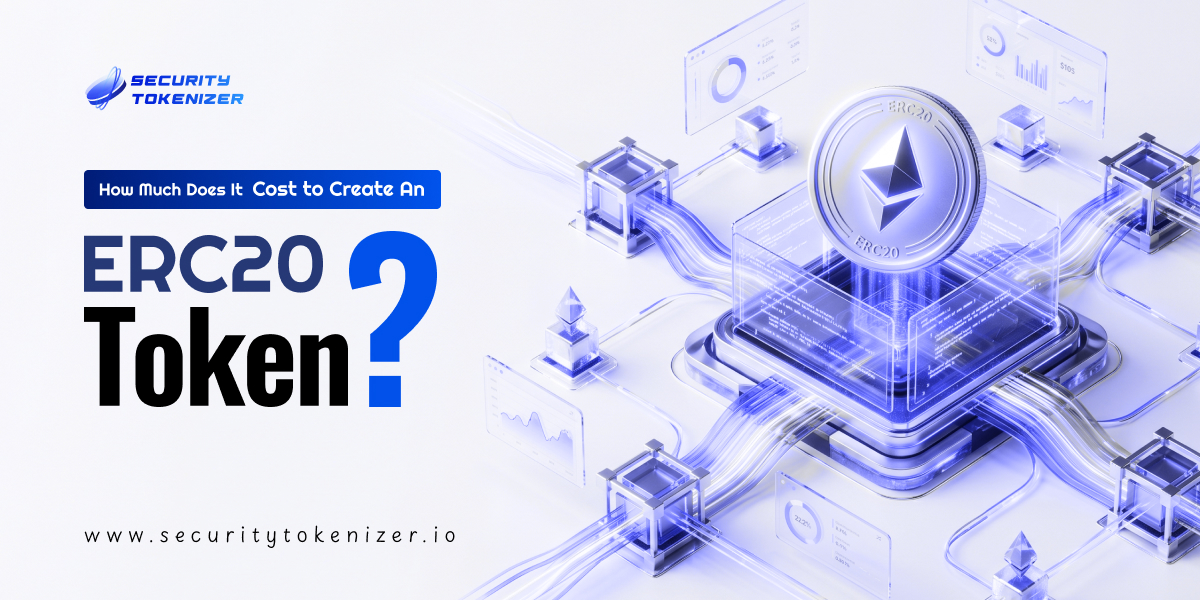
Table of Content
The demand for ERC20 Token Development continues to increase as enterprises and startups begin using blockchain technology for launching digital assets, fundraising, and decentralized networks. As Ethereum leads as the #1 blockchain for tokens, knowledge of ERC20 Token Development Cost has become a key component for a successful token launch. If you intend to Create ERC20 Token solutions for utility, defi, and enterprises; know that various factors will contribute to the final development cost. This post covers the key cost drivers and business cases, and factors contributing to the ERC20 Token Development Price on Ethereum.
ERC20 Token Development Cost Breakdown in 2026
1. Base ERC20 Token Cost
Cost for a base ERC20 token development project is generally considered the least costly one that businesses look for when they require a basic token that will have standard functionalities. Such a token generally has features such as token transfers, allocation of supply, checking balances, and management of ownership without the need of any special modifications.
Business who require a Cryptocurrency Token Development of this type are usually looking to have it created to facilitate initial Coin Offering (ICO) marketing Campaigns, Reward Programs and other Community Based Projects wherein the priority is based on the simplicity of development and time consumption.
While the cost of development remains minimum, cost for deployment along with testing remain, naturally escalating the development to higher levels of modification for the ERC20 Token Development Cost.
2. Custom ERC20 Token Cost
The cost for developing Custom ERC20 token development, on the other hand, takes an increase where businesses seek additional customized features. With the addition of features such as staking, governance voting, minting & burning mechanisms, vesting schedules, transaction taxation, role-based permissions, a much higher investment will be incurred due to the addition of complex coding along with rigorous testing procedures and thus a more advanced ERC20 Smart Contract Development will be required.
Further, when the custom development starts reaching its complex stages, many businesses move towards enterprise level solutions for it to include additional functionalities that would support large business organizations.
3. Enterprise-Grade Token Development Cost
Developing enterprise tokens for large organizations requires a robust blockchain infrastructure that can handle high transaction volumes, comply with stringent government regulations, scale efficiently, and maintain top-tier security. Such solutions must be built on a resilient, decentralized foundation, incorporating advanced cryptographic techniques, smart contract auditing, and real-time monitoring.
A strategic approach is essential; this includes defining clear use cases, aligning with business objectives, ensuring regulatory compliance from the outset, and integrating with existing enterprise systems. Scalability must be addressed through layer-2 solutions or sharding, while security protocols should include multi-signature wallets, identity verification, and continuous threat detection.
Additionally, governance models must be transparent and participatory to build trust among stakeholders. Only through a well-structured, phased development process can enterprise tokens deliver sustainable value across complex organizational environments.
ERC20 Token Development Cost Breakdown by Project Type
1. Startup Token Projects
Startup Crypto Token Development projects typically aim to test business models, launch blockchain communities, or fund projects with restricted capital investment. Projects prioritize rapid implementation but ensure token functions and Ethereum compliance.
Startup projects commonly operate with less funds, so development is concentrated on core features that generate immediate value and a market presence. Most projects, as they evolve, transform into utility driven ecosystems that require enhanced capabilities.
2. Utility Token Projects
Utility Token Development projects provide immediate, tangible value within an ecosystem or Dapp. Tokens in utility-centered projects usually grant users access to specific services, site features, membership programs, rewards programs, or transactional utility that drives the interaction of users.
The enhanced feature set necessary for a utility focused ecosystem contributes to higher development efforts and need more time for testing, therefore, influence on the Cost to Launch an ERC20 Token. With utility tokens continuously expanding, most project transform into Dapp projects that incorporate advanced tech.
3. DeFi Token Projects
DeFi Token Development projects produce tokens used in Dapp environments such as lending, staking, liquidity pooling, yield farming, governance and automated financial services. DeFi projects often requires complicated smart contract functions, sophisticated security models and smooth integration with established DeFi networks.
The extensive use of financial automation along with smart contract integration add up to a higher ERC20 Token Launch Cost. The ever-growing use of blockchain across all sectors has been driving the expansion of Enterprise Tokenization projects.
4. Enterprise Tokenization Projects
Digital Asset Token Development involves creating blockchain-based platforms to manage tokenized assets, enhancing operational efficiency and improving organizational transparency. These enterprise-level initiatives prioritize regulatory compliance, seamless asset lifecycle management, auditability, and scalability.
While such projects often come with higher development costs due to their complexity and stringent requirements, they offer significant long-term benefits, including improved trust, streamlined processes, and better decision-making through greater visibility and traceability.
Factors that Determine the Cost to Launch a ERC20 Token
Token Features and Complexity
The number and type of functions implemented into a token directly impact the overall cost of ERC20 Token Development. Whereas simple tokens often have less complexity in terms of coding and testing required, advanced features such as staking, governance, reward systems, vesting plans, and transaction restrictions often require more complex development work.
Smart Contract Development
High-quality smart contract development serves as the foundation for any successful Ethereum-based token launch. These contracts manage token transactions, access control, automation of business logic, and compliance with ERC20 standards, necessitating skilled blockchain developers to build secure and efficient solutions.
Security Audit
Professional ERC20 Token Audit Services are designed to protect your blockchain projects from vulnerabilities, coding errors, and exploit issues. These professional services go over all aspects of smart contract logic and check the code for weaknesses and adherence to best practices prior to deployment.
Ethereum Gas Fees
The expense of Gas Fees on Ethereum has the biggest impact on ERC20 Token Launch Cost during peak transaction times. To deploy smart contracts and perform on-chain transactions, you must pay Ethereum Gas fees, which can fluctuate based on congestion as well as the complexity of a smart contract.
Wallet Integration
Wallet support is a necessary part of Token Development on Ethereum, providing a way for people to manage and transfer assets safely across various supported platforms. Compatibility with many cryptocurrency wallets serves to improve user adoption and ease of access to a project's token.
Exchange Listing
Availability on Exchanges is often a primary deciding factor when looking at the Cost to Launch an ERC20 Token, especially when targeting a wide user base. ERC20 Token Listing Services can incorporate all of the necessary legal compliance work, due diligence, and smart contract integration that needs to be done in order to have a token listed on exchanges.
Conclusion
The final cost of ERC20 Token Development depends on a number of factors including: the specific functions of the token, the complexity of the smart contract, the security audit of the smart contract, the gas fee for smart contract deployment on the Ethereum platform, wallets where your tokens are required, plans for listing the token in an exchange.
Each project's objectives are different; so the costs of development will vary greatly depending on the size, functions, and long-term goals of the token system. When a business is looking for a dependable Token Development Company, then they should also consider the aspect of future scalability and security alongside the initial cost of development. Security Tokenizer, a reliable token development company, can provide the most end-to-end ERC20 Token Development Service to provide its customers with the most secured and scalable token and future readiness on the Blockchain.