


 SecurityTokenizer

Subscribe Our Newsletter
Gold Mining Tokenization Services: Redefining Transparency in Gold Markets
Gold Mining Tokenization Services enable mining companies to convert physical gold reserves and mining rights into blockchain-based digital tokens. This approach enhances transparency, liquidity, and global investor accessibility while ensuring secure ownership, traceability, and compliance.
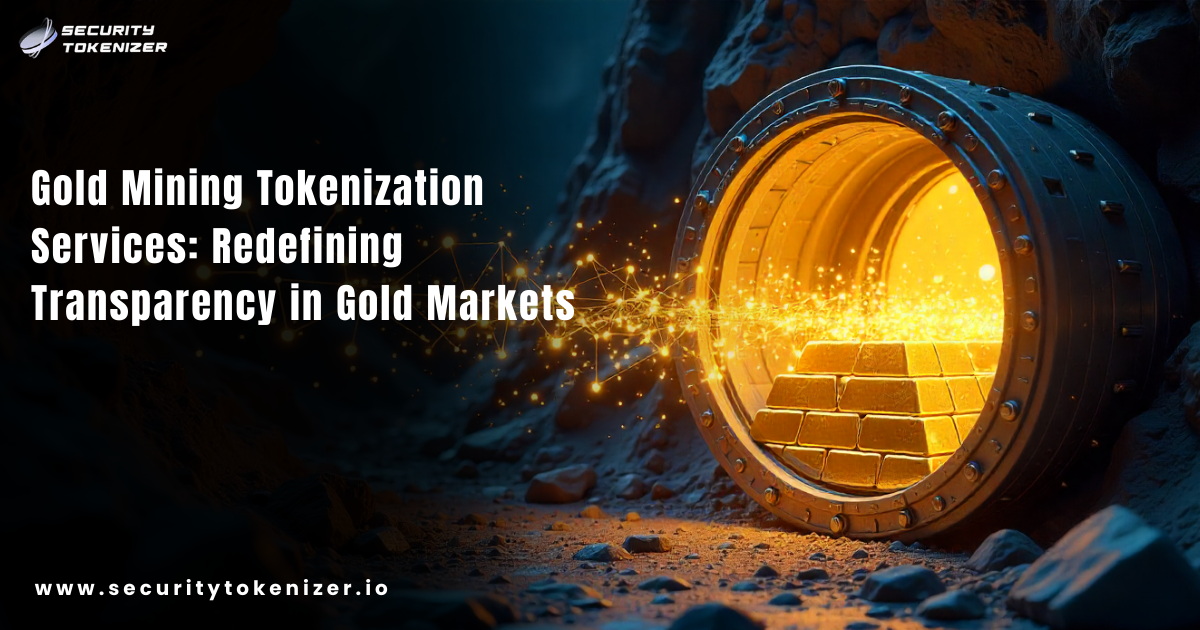
Table of Content
Gold mining tokenization services allow the digital representation of gold-related assets using blockchain technology. This approach creates a structured link between physical resources and digital ownership models. By improving transparency and accessibility, tokenization supports more efficient asset management and exchange. It is increasingly viewed as a useful component of modern financial infrastructure for commodity-based assets.
Overview of Gold Mining Tokenization Services
Gold mining tokenization services focus on converting physical gold assets or mining-related rights into secure digital tokens backed by real-world value. This approach enables more transparent ownership tracking and simplifies the management of gold-linked assets digitally. By using Gold Tokenization, stakeholders gain improved visibility, traceability, and accessibility without changing the basic physical asset structure. It serves as a foundational layer for advancing gold investment and asset control models.
How It Works: Bridging Physical Mines with Digital Ledgers
Gold mining tokenization connects real-world mining assets with blockchain systems to assure open, secure, and verifiable digital representation.
Asset Identification and Verification
Physical gold reserves or mining rights are identified, audited, and verified to establish their real-world value and ownership validity.
Digital Asset Creation
Verified assets are converted into digital tokens using an asset tokenization platform, creating a direct and traceable link between physical gold and its digital counterpart.
Blockchain Recording and Security
All asset data, ownership records, and transactions are stored on decentralized ledgers through blockchain for gold mining, guaranteeing immutability and transparency.
Ownership Management and Transfer
Token holders can securely manage, transfer, or trade ownership while maintaining a continuous connection to the underlying physical asset.
Ongoing Compliance and Monitoring
Smart contracts and blockchain records support ongoing audits, compliance checks, and real-time asset tracking.
Unlocking Liquidity: Key Benefits for Miners and Investors
Gold mining tokenization improves liquidity and accessibility while maintaining a strong link to real-world assets.
Improved Asset Liquidity
Tokenization allows traditionally illiquid gold mining assets to be represented digitally, making them easier to trade and transfer through commodity tokenization models.
Fractional Ownership Opportunities
Investors can join in tokenized gold investment by owning fractions of gold-backed assets, lowering entry barriers and expanding market access.
Transparent Ownership and Valuation
Blockchain-based records provide clear visibility into asset ownership, worth, and transaction history, increasing trust among stakeholders.
Faster and Efficient Transactions
Digital tokens allow quicker settlement and reduced demand on intermediaries, simplifying how miners and investors interact with gold-linked assets.
Global Market Accessibility
Tokenized assets can be accessed by a broader investor base across regions, supporting broad participation without physical asset movement.
Better Risk Management
Tokenization introduces structured governance and real-time visibility into asset performance, helping miners and investors better assess risks related to production, ownership, and market fluctuations.
High-Impact Use Cases of Gold Mining Tokenization
Gold mining tokenization enables practical applications that improve transparency, funding access, and operational efficiency across the gold value chain.
Capital Raising for Mining Projects
Mining companies can digitize asset ownership to attract global investors, enabling more flexible and efficient funding for exploration and production activities.
Digital Ownership and Asset Trading
Tokenized representations allow stakeholders to buy, sell, or transfer ownership rights without the difficulties of physical asset handling.
Supply Chain Transparency
Tokenization helps track gold from extraction to distribution, improving traceability and reducing the risk of fraud or misunderstanding.
Investment Portfolio Diversification
Investors can gain access to gold mining assets as part of a diversified digital portfolio, balancing traditional and modern asset classes.
Compliance and Audit Simplification
Blockchain-based records support easier auditing, regulatory reporting, and compliance verification throughout the asset lifecycle.
The Tokenization Roadmap: A Step-by-Step Asset Onboarding Process
An organized onboarding mechanism is key to guaranteeing that gold mining assets are properly digitized.
Asset Assessment and Documentation
Mining assets are assessed in terms of ownership, reserves, and legal documents that verify eligibility to be tokenized. The process provides a physical basis to support digital assets.
Legal and Regulatory Alignment
The compliance needs that relate to the issue at hand will be assessed in order to make sure that the structure of the assets is within the specifications of the region. Early alignment of regulation decreases potential risks and work-related delays.
Digital Token Structuring
Tokens: Created using asset values, rights of ownership, or the rules of distribution, they provide the building material of digital representation. This is where control and value management decisions are made.
Smart Contract Development
Automatic contracts are designed to handle ownership matters, transfer, and regulate openly and securely. Smart contract development is useful to avoid human intervention and execute strict conditions.
Deployment of Blockchain
The asset is then placed on a secured blockchain network. This allows the asset to be immutably recorded and traced. This process makes all transactions secure and open.
Testing and Validation
The functionality of the system, security features, and transaction processes must be tested for reliability before the public or investors use the system.
Platform Integration and Go Live
The tokenized asset will then be incorporated into the digital platform being utilized. This allows it to be managed and traded. After its launch, stakeholders are capable of engaging with this asset through a streamlined digital interface.
Technology Stack Behind Gold Mining Tokenization
A strong technology infrastructure is essential for making gold mining tokenization systems secure, transparent, and scalable.
Blockchain Framework
Public or permissioned blockchains are employed for storing asset information, as well as transaction data, in a secure and open fashion.
Smart contracts
The smart contract is responsible for automating asset creation, asset transfer, as well as governance and creation rules.
Layer of Asset Control
It involves managing the registration, valuation, and life cycle of assets, ensuring that there is a clear relationship between physical gold assets and electronic records.
Security and Identity Management
Advanced security measures, such as encryption and verification techniques, protect personal and private information from hacking and other forms of misuse.
Integration and API Frameworks
APIs allow easy integration with third-party systems like compliance platforms, analytics portals, and platforms for investors.
User Interface and Dashboard
Intuitive dashboards enable admins, investors, and other stakeholders to track asset, transaction, and performance-related information in real time.
Conclusion
Gold mining tokenization is changing the face of how miners and investors engage with precious metals by providing a combination of transparency, security, and liquidity on the blockchain. By utilizing an innovative token development company, there is a smooth fusion between the physical and the blockchain world. Collaboration with Security Tokenizer allows companies to create their own gold assets on the blockchain.