






 SecurityTokenizer

Subscribe Our Newsletter
How Latest Smart Contract Innovations Are Transforming Blockchain Applications
Discover how the latest smart contract innovations are reshaping blockchain applications with improved automation, security, and scalability across industries.
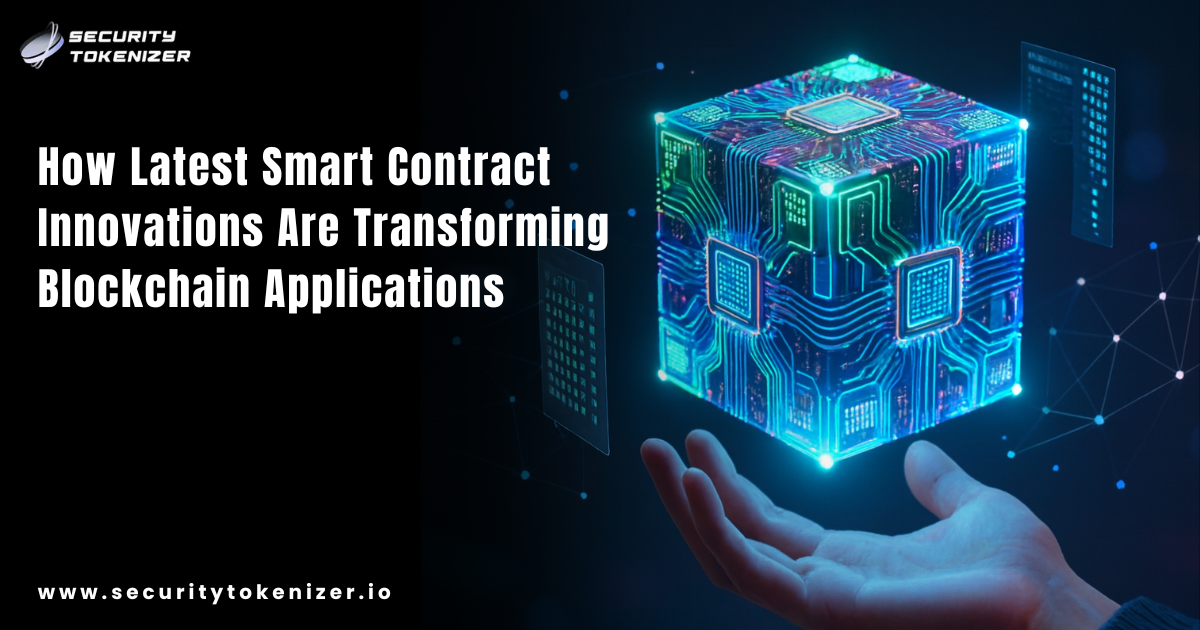
Table of Content
Smart contracts are no longer just basic blockchain scripts. Now, they're the core of DeFi, business blockchain tech, and new Web3 apps. With progress in cross-chain work, privacy tech, AI help, and better frameworks, smart contracts are stronger and more flexible than before.
As these changes keep reshaping blockchain, staying up-to-date is important for developers, businesses, and fans who want to get the most out of it.
The New Era of Smart Contracts: What’s Changed in 2025
Smart contracts have developed far beyond their initial capabilities, becoming more versatile, secure, and scalable than ever before. Creations in blockchain system integration, privacy features, and AI-based contract optimization are redefining how decentralized applications and enterprise solutions operate.
The market for smart contracts is experiencing remarkable growth, with projections estimating a value of $2.14 billion in 2025, potentially reaching $12.07 billion by 2032 at a CAGR of approximately 23.9%. Ethereum continues to dominate the ecosystem, holding around 70% market share, followed by Binance Smart Chain at 15%. Geographically, North America led the market in 2024 with a 35% share, while the Asia-Pacific region is emerging as the fastest-growing center for smart contract adoption.
Cross‑Chain and Multi‑Chain Smart Contracts: Breaking Ecosystem Silos
Interoperability is the new frontier, allowing smart contracts to operate smoothly across multiple blockchains.
Why Cross‑Chain Matters
Cross-chain capabilities allow assets, data, and contracts to interact across different blockchains, unlocking liquidity and efficiency that single-chain systems cannot provide.
Multi‑Chain Deployment
Deploying smart contracts on multiple chains assures duplication, broader reach, and better adoption by diverse user bases, supporting both DeFi and organization applications.
Bridging Ecosystems
Cross-chain connects facilitate smooth asset transfers, token swaps, and inter-chain messaging, reducing errors for users and developers alike.
Improved dApp Functionality
Multi-chain smart contracts allow decentralized applications to access more resources, integrate huge services, and scale globally.
Future-Proofing Blockchain Solutions
By adopting cross-chain and multi-chain strategies, developers can build stronger, adaptable systems, staying ahead of ecosystem separation and market demands.
Privacy, Security & Compliance: ZK‑Proofs, Identity & Audits in Smart Contracts
When building smart contracts, security and privacy are key to building trust and meeting regulations.
Zero-Knowledge Proofs (ZK-Proofs)
ZK-Proofs let smart contracts check transactions without showing sensitive info. This boosts privacy for both users and businesses.
Identity Management
Adding decentralized identity tools makes sure everyone is checked. This allows secure actions and helps meet rules worldwide.
Smart Contract Audits
Routine checks and formal reviews spot problems, lower risks, and build faith in live contracts. This also keeps contracts in line with audit standards.
Compliance checks
Putting compliance steps into contracts makes sure they follow laws and rules. This helps businesses, and DeFi run better.
Risk Reduction
Using ZK-Proofs, identity tools, and audits, developers can cut down on security risks and keep user funds safe.
AI‑Powered & Upgradeable Smart Contracts: Smarter, Adaptive Blockchain Logic
Smart contracts are becoming more intelligent and adaptable, using AI and modular frameworks for improved functionality.
AI-Based Contract Generation
Artificial intelligence helps create simplified smart contracts by automating code generation, reducing errors, and improving efficiency.
Machine Learning for Optimization
Machine learning analyzes contract performance and usage patterns, allowing predictive adjustments and smarter execution strategies.
Upgradeable Contract Frameworks
Modular and upgradeable contracts allow developers to implement improvements without redeploying, confirming flexibility in developing ecosystems.
Enterprise-Ready Solutions
These adaptive contracts support complex enterprise workflows, offering scalability and integration with existing blockchain development services.
Improved DeFi Applications
AI-powered, upgradeable smart contracts improve DeFi protocols’ stability, automation, and user experience, supporting modern DeFi smart contract development actions.
Real‑World Use Cases: From DeFi & DAOs to Tokenized Assets and Enterprise Solutions
Smart contracts aren't just ideas anymore; they're now used in many fields.
Decentralized Finance (DeFi)
Smart contracts make lending, borrowing, and trading automatic, which helps DeFi development cut out the middleman and be more open.
Decentralized Autonomous Organizations (DAOs)
DAOs use smart contracts to handle governance, voting, and money management without a central power.
Tokenized Assets
Tokenization smart contracts make it possible to own parts of things like real estate and art, transfer them safely, and make digital and physical assets easier to sell.
Enterprise Blockchain Solutions
Businesses use smart contracts to handle supply chains, check identities, and make international payments, fitting in with enterprise blockchain options.
NFT Smart Contract Applications
NFTs use special smart contracts to handle who owns them, how payments work, and where they come from, which is the foundation for gaming, collectibles, and digital art platforms.
Conclusion
Smart contracts are changing blockchain, impacting everything from DeFi and DAOs to business solutions and NFTs. Leading experts like Security Tokenizer are helping businesses simplify tokenization processes while assuring compliance and security. With strong security, token features, and AI upgrades, companies can create secure and scalable platforms. Working with a good Smart Contract Development Company means getting the support needed for NFT and token creation. Using these tools and plans, developers and businesses can easily manage blockchain, delivering secure and efficient apps that are ready for what’s next.